


By Emily Nunez
The Costume Art exhibition at the Metropolitan Museum of Art reveals that clothing is more than something people wear — fashion reflects different periods, cultures, and ideas. The show brings together garments, accessories, and works of art that explore the relationship between the body and clothing. The gallery features pieces with detailed fabrics and elaborate designs, including carefully preserved work from the past and present. Each display offers a closer look at the craftsmanship behind the clothing and the history connected to it. From the wide gallery spaces to the intricate details of embroidery and construction, the exhibition offers a visual journey where fashion becomes a record of art, culture, and history.
Dancers with Instruments
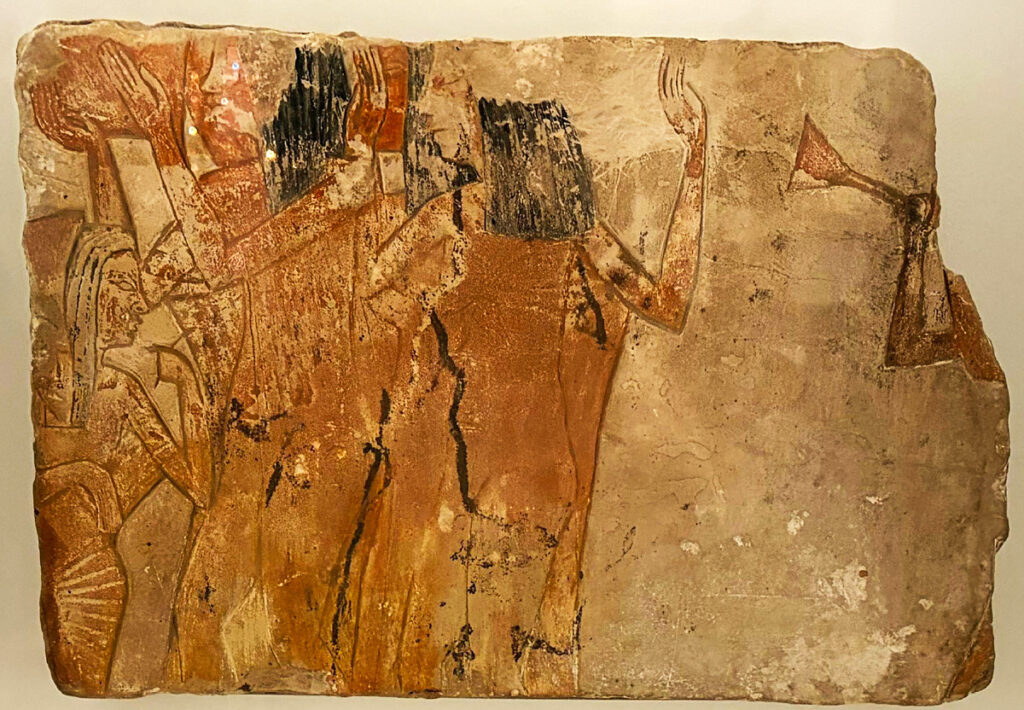
The women carved into this stone relief show how clothing wasn’t always an important factor in female depictions. Instead the hair and draped fabrics are the defining characteristics for women.
A Bejeweled Maiden with a Parakeet
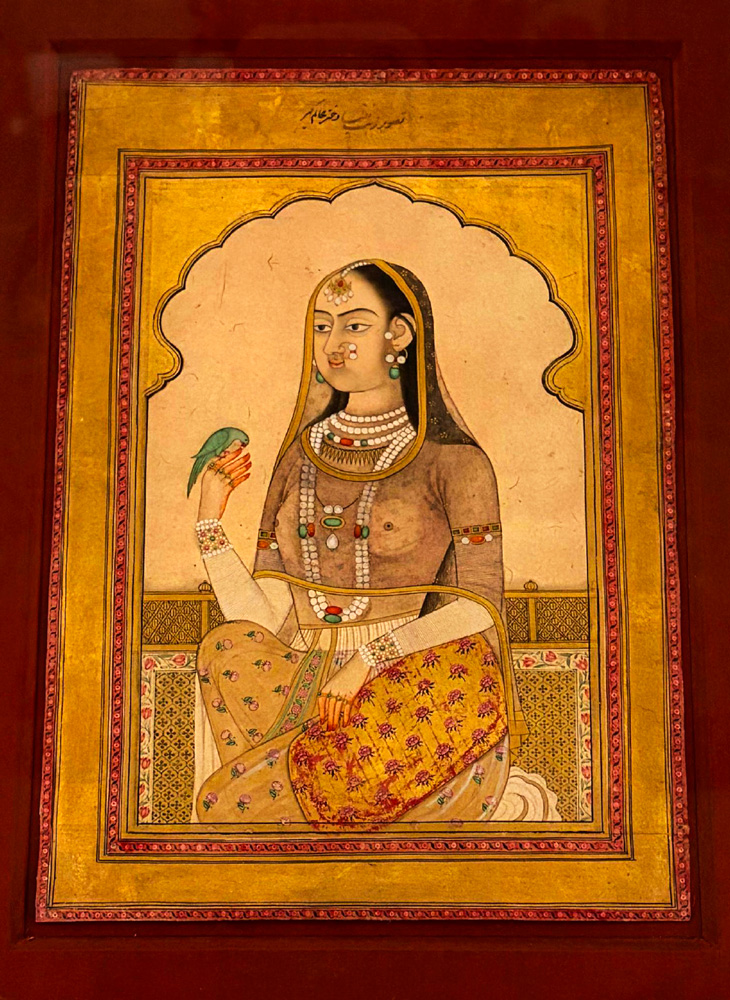
This watercolor painting is from India and dates to around 1670-1700. The details and patterns are so elaborate that even the edges are decorated. These patterns are found in Indian women’s clothing and jewelry.
Terracotta Oinochoe (Jug)
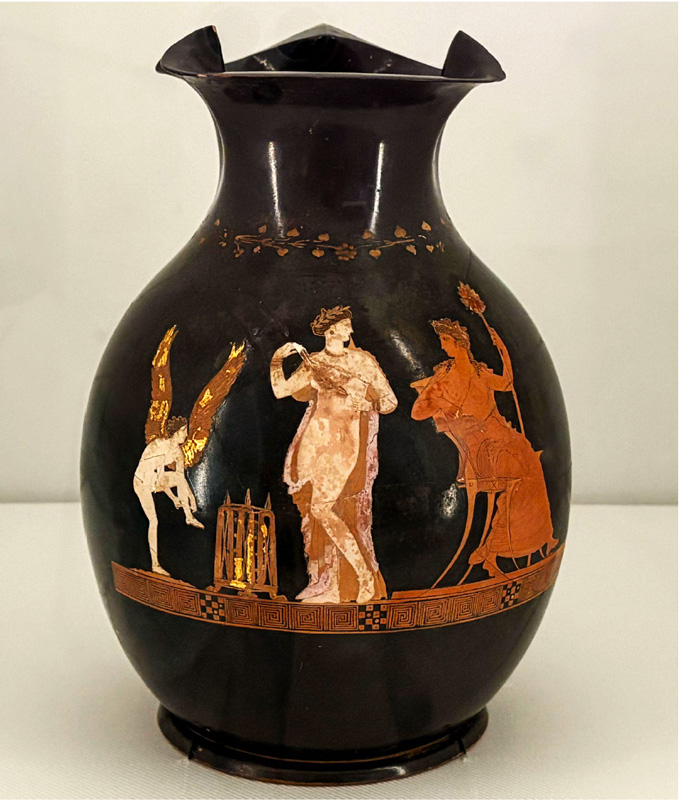
This Greek jug is from the mid-fourth century BCE. The figures wear floral headpieces and draped clothing, with hints of gold highlighting the painting of the Greek gods. Pompe is mostly nude, with only a mantle covering her. She holds a wreath and looks toward Dionysos, who is sitting and wearing a diadem or headband. The winged Eros is adjusting his sandals, as if he is getting ready to leave. The decorated basket on the ground was commonly used in religious ceremonies to carry tools used for sacrifices.
A Change in the Petticoats, or the Years 1780 &1817
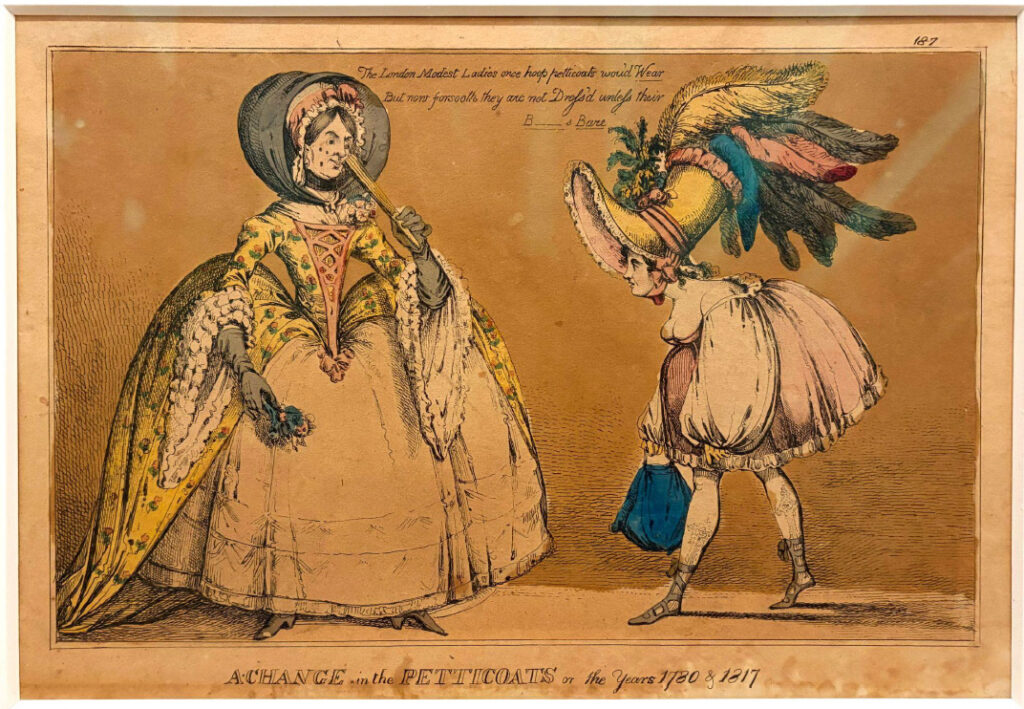
This fashion satire responds to the short skirts that became fashionable in London around 1817. It contrasts more modest styles with current fashions. An inscription on the work reads, “The London Modest Ladies once hoop petticoats wou’d Wear
But now forsooth they are not Dress’d unless their B___s Bare.”
Dress
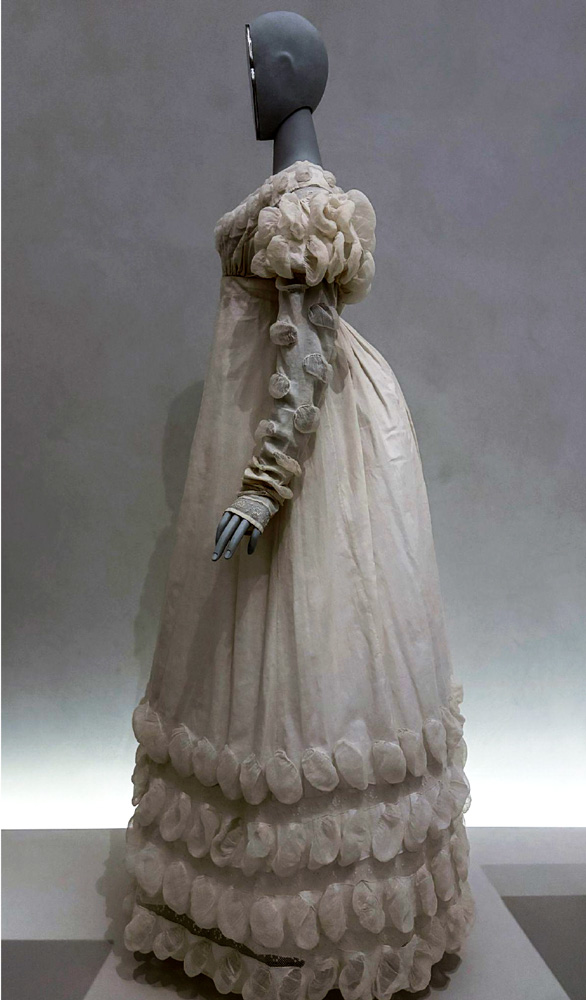
This European dress from 1818 is an example of gowns women would wear on a daily basis. It is made of cotton and very thin lacing.
Martyr to Love
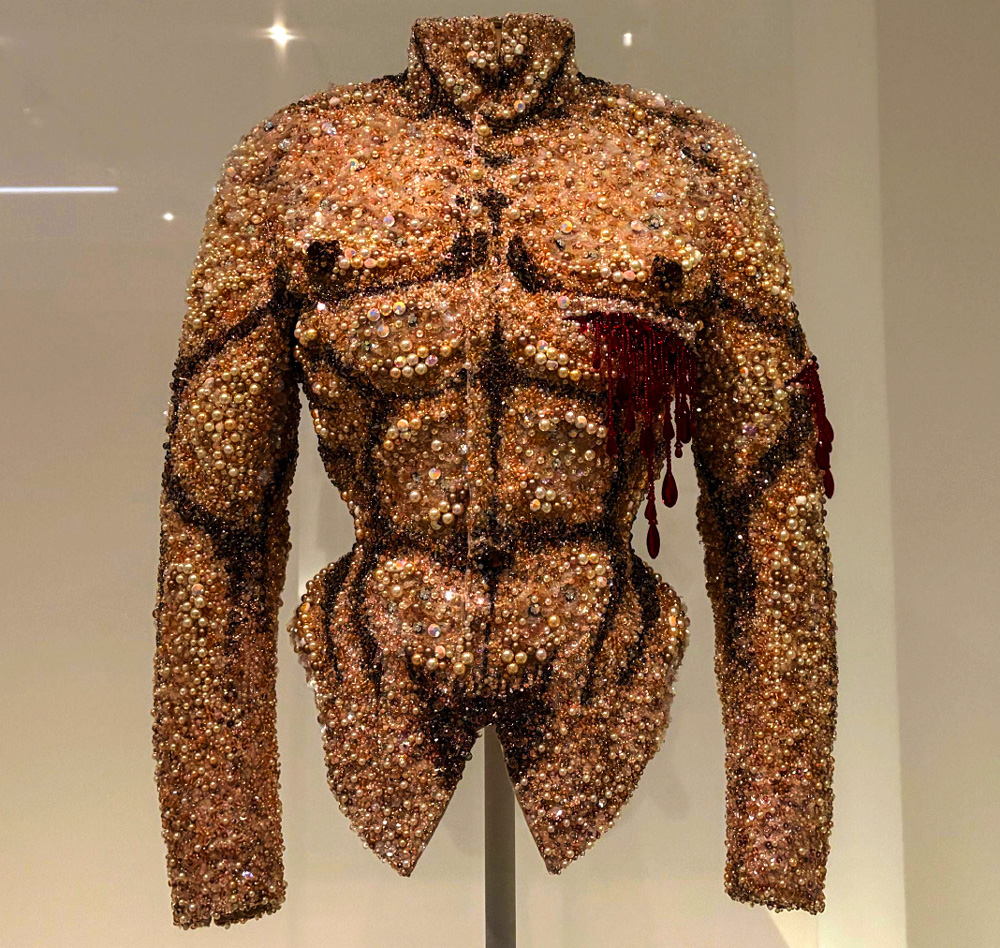
This jacket, adorned entirely with pearls, appears romantic at first glance. Upon closer inspection, however, the design reveals a heart that has been ripped from the chest.
A Woman Applying Henna
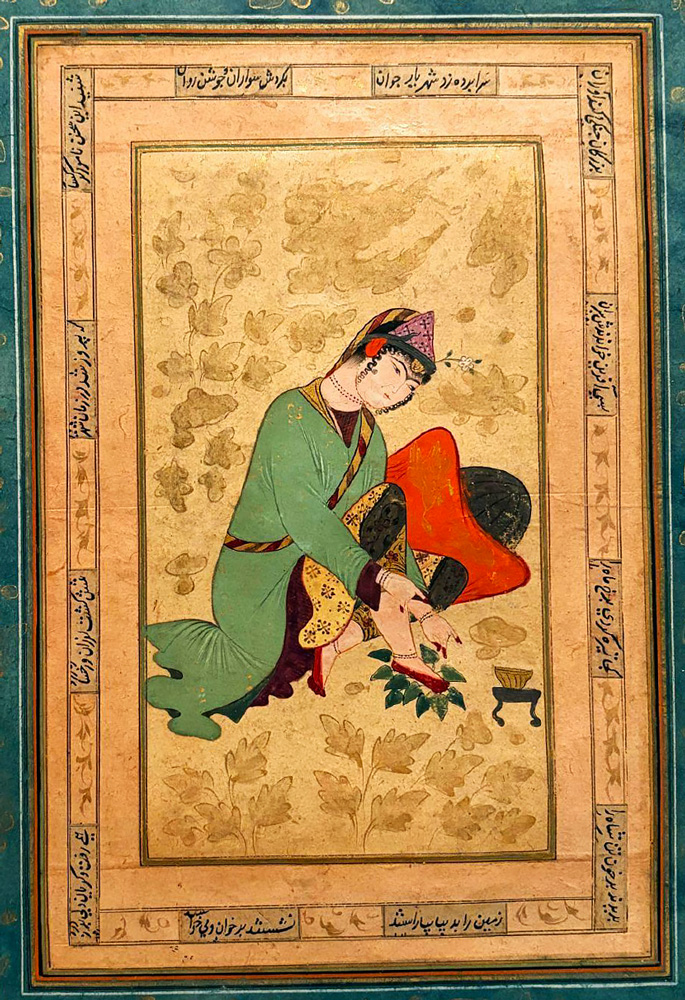
A young woman applies henna to her feet, a tradition connected to marriage celebrations in Iran and nearby regions. The artist focused on everyday life, which became more common in Safavid art. The woman’s foot rests on henna leaves, and her clothing reveals her gold and gray undergarments underneath. The painting was likely created for an album of artwork.
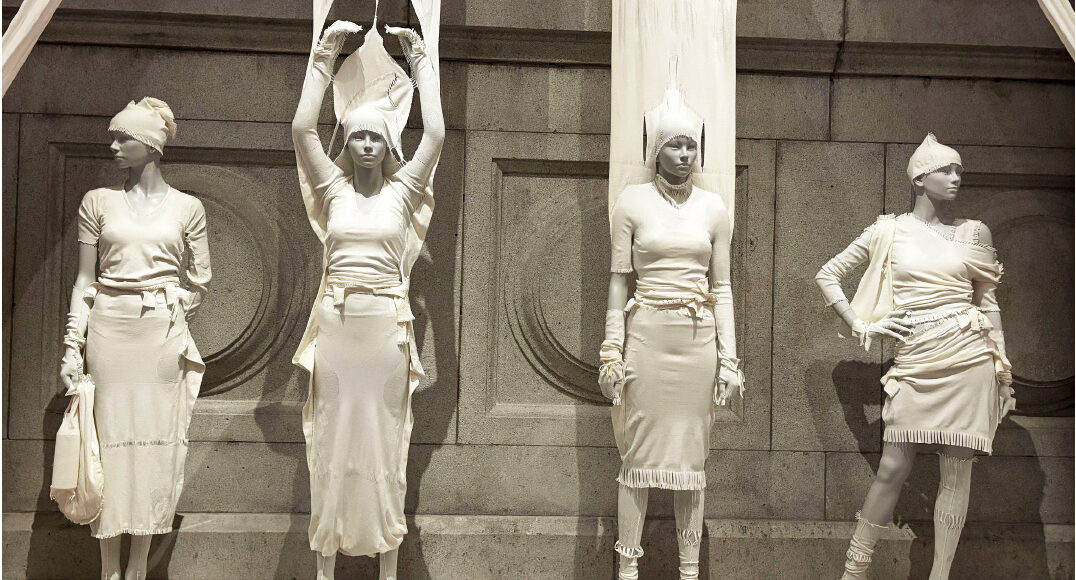
A-POC KING
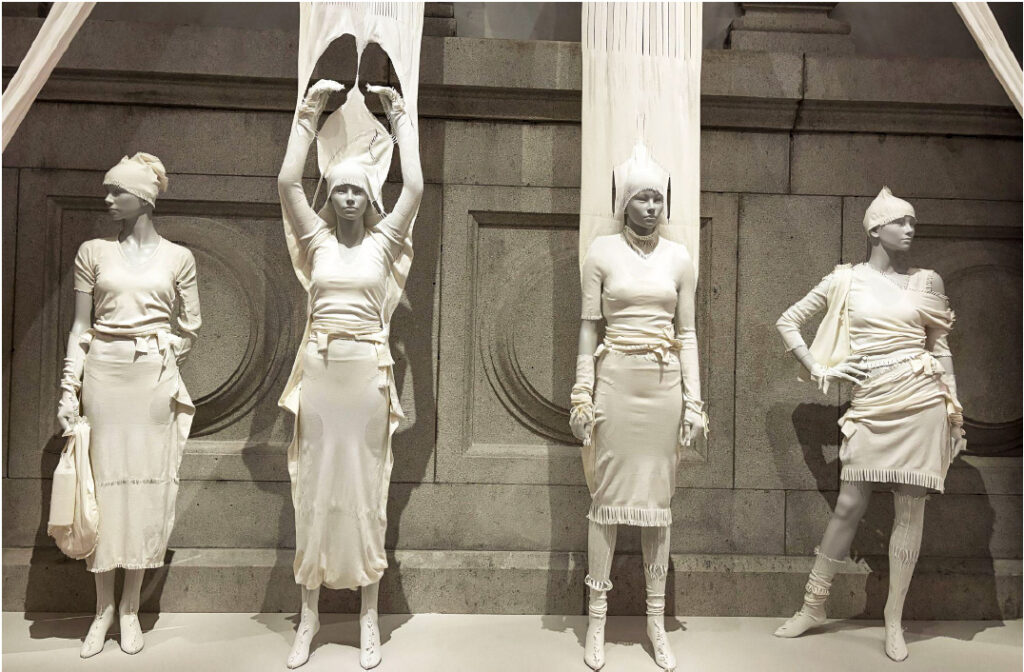
This Japanese fashion design by Issey Miyake refers to A-POC technology. According to Miyake’s web site, “The A-POC technology is based upon single piece of thread that is fed into an industrial knitting or weaving machine programmed by a computer, and that not only created a new form of mass-produced clothing with many variations.” I like that they’re tied to what seem to be curtains mainly made of cotton, making clothing out of them while tying the sculptures to them. It kind of scared me because most of the human-like pieces were faceless and then you enter a room and find these.
Wearing Greece
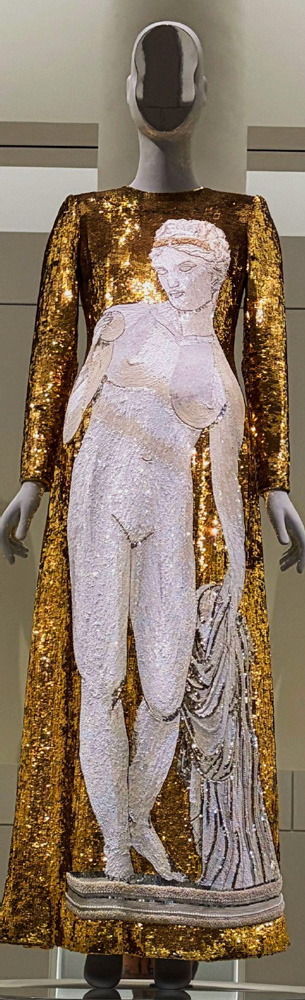
The first piece you see when you enter the exhibition is definitely attention grabbing. It reflects the ancient Greeks’ comfort with nudity andtheir ideals of beauty, strength and physical perfection. At the same time, the figure’s grip on the clothing could be seen as a sign of insecurity.