By Syeed Salvant
The American Museum of Natural History has long stood as one of New York City’s most recognizable cultural and educational institutions. Located on Manhattan’s Upper West Side, the museum draws visitors from around the world. Anyone with even a passing interest in science is likely to feel instantly engaged. The stories told here span billions of years of Earth’s history, and while science can often feel complex or intimidating, the museum presents it in ways that are accessible to audiences of all ages. It is an experience that leaves a lasting impression.
Throughout the museum, sculptural displays and detailed dioramas blend science with visual storytelling. Life-sized models of animals, human figures, and entire ecosystems are carefully arranged to reflect real-world environments. These exhibits provide crucial context, helping visitors visualize how species interact with their surroundings and how cultures adapt to different landscapes. The craftsmanship behind the displays reflects the museum’s long-standing commitment to education through realism and detail.
The museum also features immersive exhibits that bring visitors face to face with living organisms and the processes that shape them. One example is the butterfly conservatory, where visitors walk through a climate-controlled environment designed to resemble a tropical ecosystem. The exhibit emphasizes the importance of biodiversity in the development and survival of life forms—especially at a time when many species face mounting threats from climate change and habitat loss.
The museum’s rock and mineral halls do more than showcase visually striking specimens; they tell the story of how Earth itself was formed. Visitors encounter everything from crystals and gemstones to rare minerals that developed miles underground under extreme heat and pressure. Each specimen reveals how a mineral’s composition and environment influence its color, texture, and durability. Beyond their beauty, these materials have played a crucial role in human history, shaping everything from architecture to modern technology.
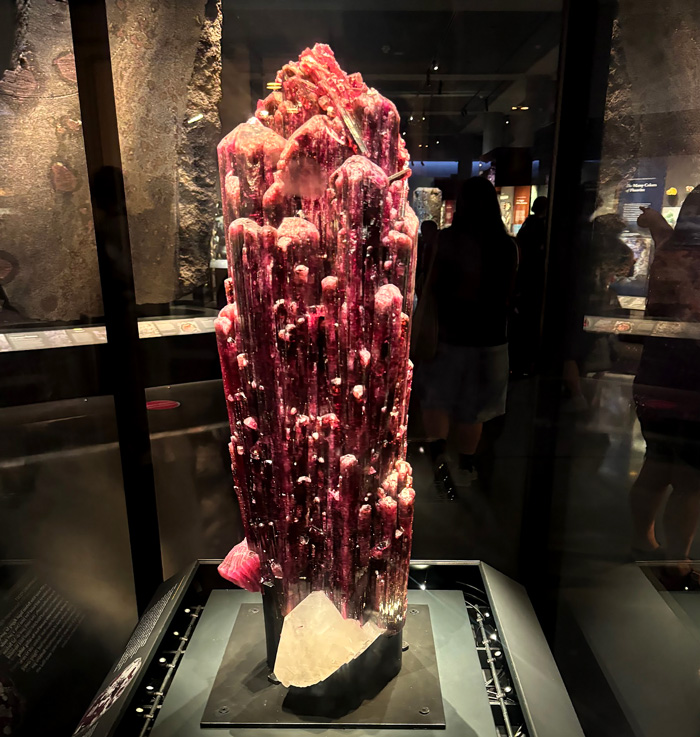
Known as the “Tarugo,” this elbaite tourmaline from Minas Gerais, Brazil, stands out for its exceptional size and distinctive cranberry-colored crystal.
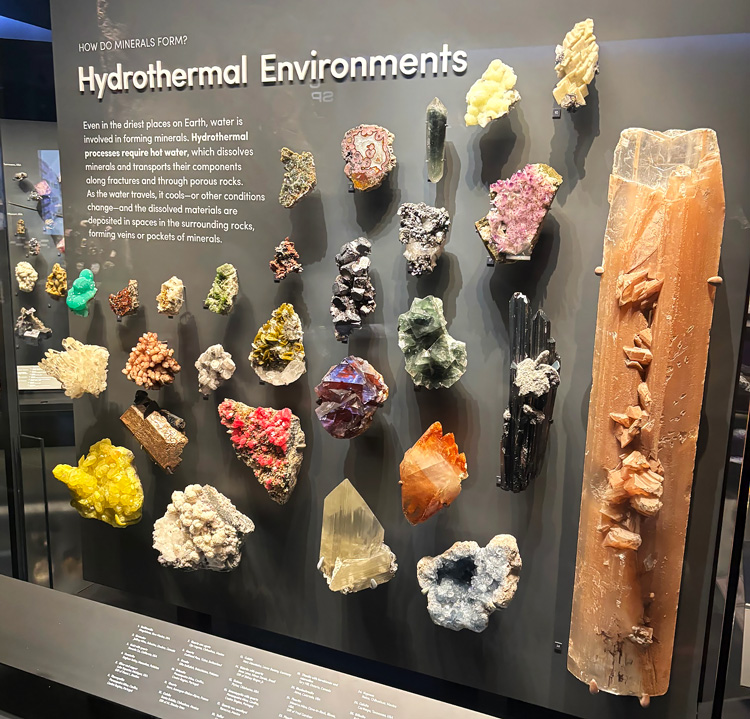
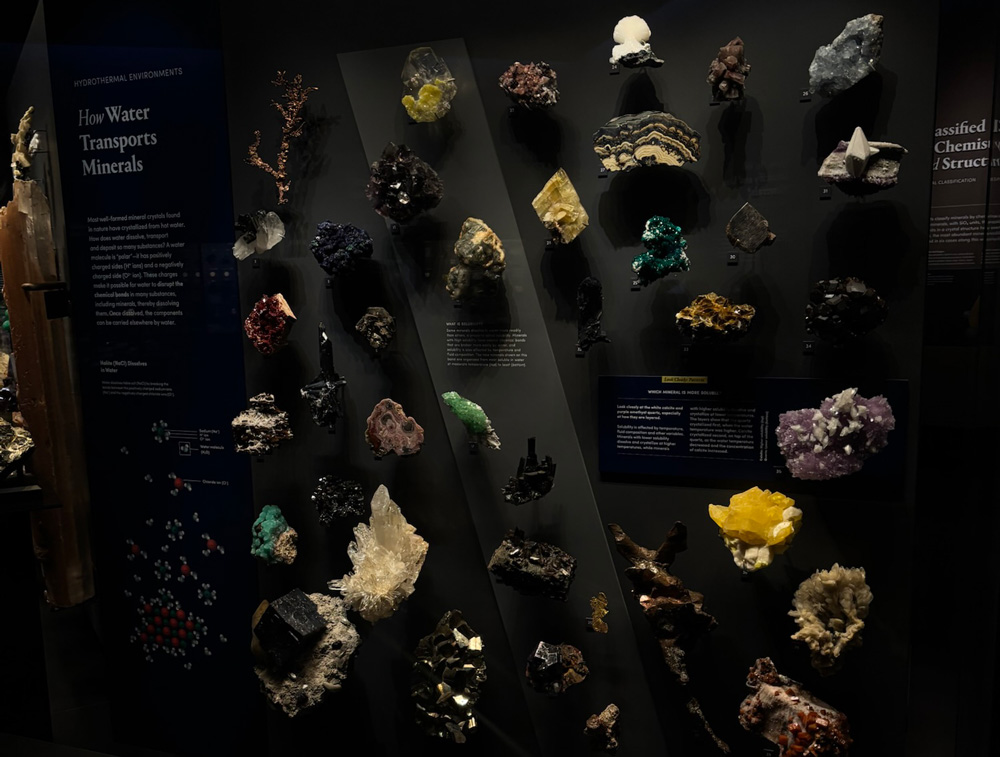
Nearby displays explain how minerals form through hydrothermal activity, a process in which hot, mineral-rich water deposits dissolved materials into surrounding rock.
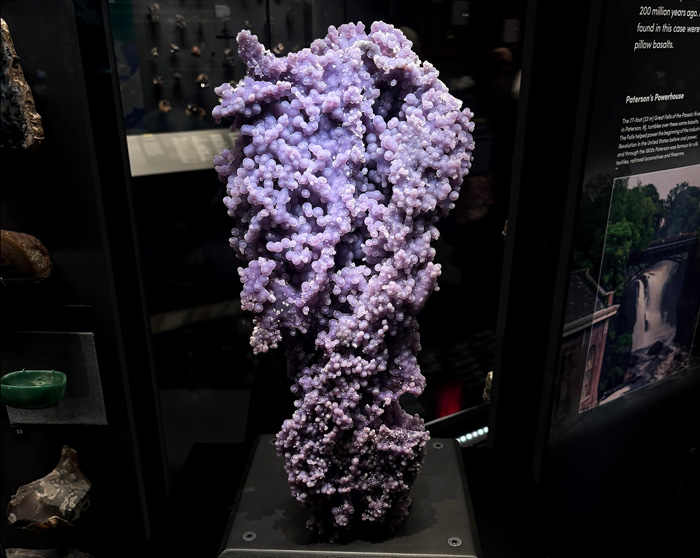
Grape agate, a form of chalcedony quartz from Indonesia, is also on view, recognized for its distinctive grape-like clusters.
Other specimens demonstrate the variety of minerals created through hydrothermal processes, illustrating how heat, pressure, and chemistry combine to shape the natural world.
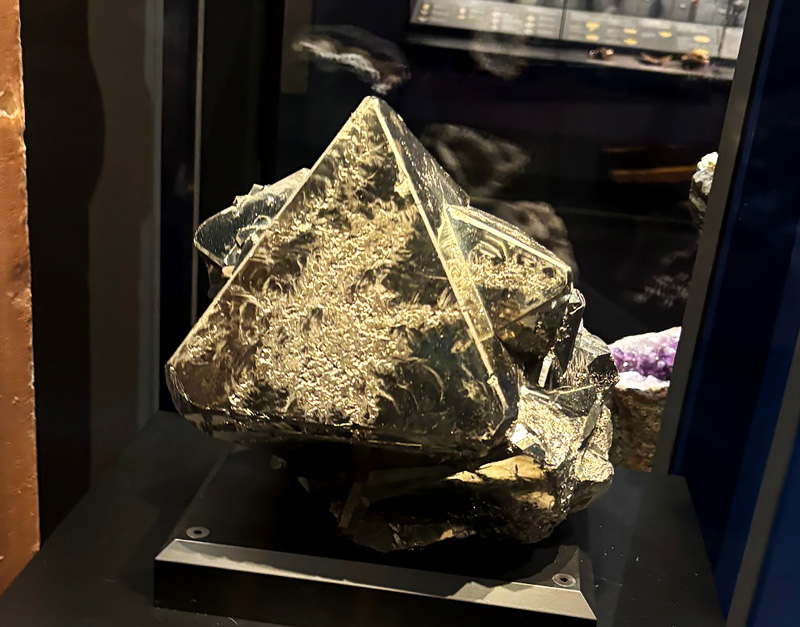
Pyrite, often called “fool’s gold,” forms cubic crystals, as seen in this specimen from the Huanzala Mine in Peru.
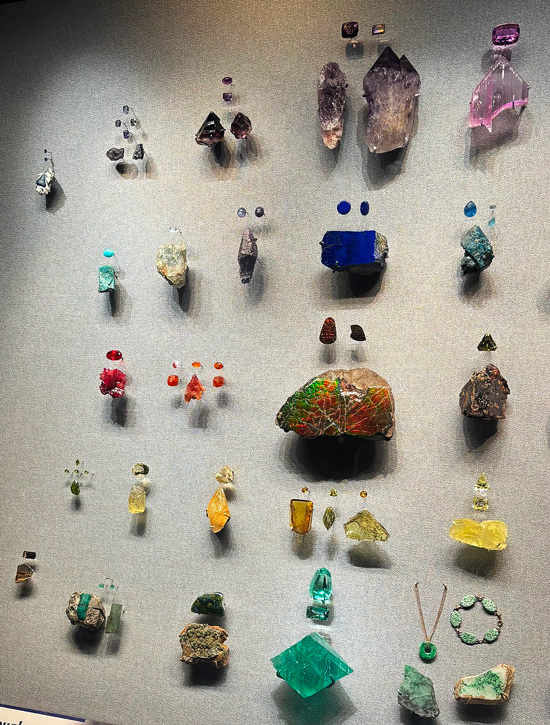
The “Rough and Cut” exhibit compares raw mineral crystals with finished gems, illustrating the artistry and precision of gem cutting.
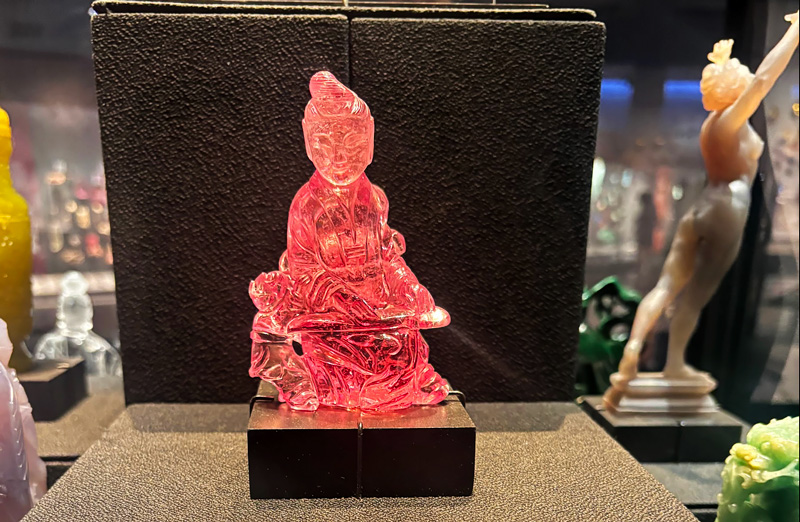
A delicate statue of a musician playing a zither, carved from pinkish morganite.